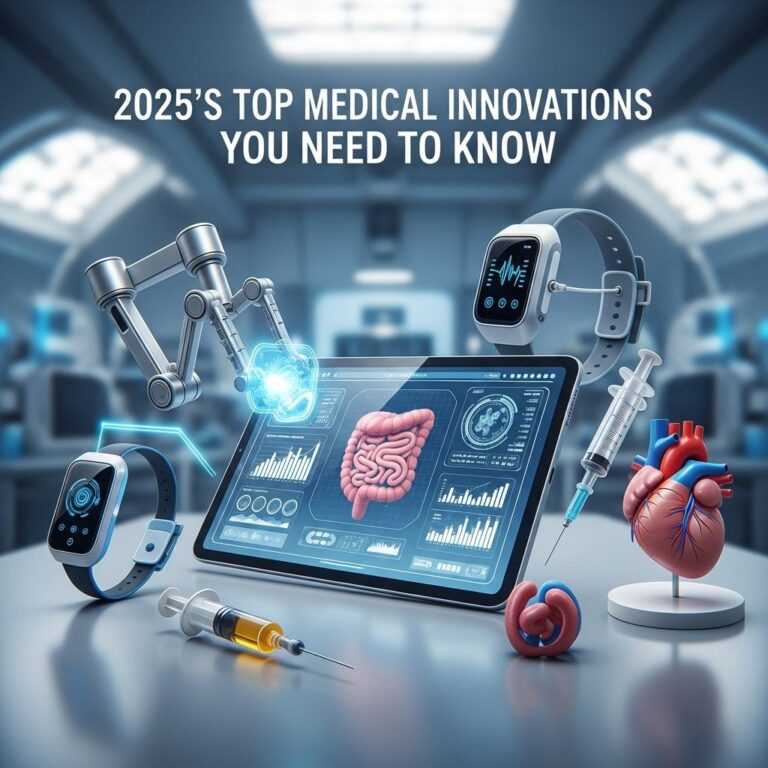
As we move further into the 21st century, the healthcare landscape is evolving at an unprecedented pace. Emerging technologies are reshaping how we approach prevention, diagnosis, and treatment, enhancing patient care while also reducing costs. In 2025, several groundbreaking innovations are set to transform the medical field. This article explores these advancements and their potential impact on healthcare delivery, patient outcomes, and disease management.
1. Telemedicine Advancements
Telemedicine has been a game-changer, especially highlighted during the COVID-19 pandemic. By 2025, we expect significant advancements in telehealth technologies, making healthcare more accessible than ever before.
Key Features of Future Telemedicine
- AI-Enhanced Diagnostics: Artificial Intelligence will assist healthcare providers in diagnosing conditions during virtual consultations.
- Wearable Tech Integration: Devices that monitor vital signs can transmit real-time data to healthcare professionals.
- Virtual Reality Therapy: VR can provide treatment for mental health issues, offering immersive therapy sessions.
2. Personalized Medicine
The era of one-size-fits-all treatment is coming to an end. Personalized medicine tailors treatments to individual genetic profiles, leading to more effective therapies with fewer side effects.
Machine Learning & Artificial Intelligence
The Role of Genomics
Advancements in genomic sequencing technology are driving this changes. By 2025, we can expect:
- Widespread use of genetic testing for predictive analytics.
- Customized drug regimens based on individual genetic makeups.
- Targeted therapies for conditions like cancer, ensuring higher success rates.
3. Robotics in Surgery
Robotic-assisted surgeries are becoming the norm, offering precision and reduced recovery times. By 2025, surgical robots will be more advanced, featuring enhanced capabilities.
Benefits of Robotic Surgery
| Benefit | Description |
|---|---|
| Precision | Minimally invasive procedures with greater accuracy. |
| Reduced Recovery Time | Smaller incisions lead to quicker healing. |
| Enhanced Visualization | 3D visualization tools provide surgeons with better insight during operations. |
4. Wearable Health Devices
Wearable technology continues to make significant strides, not only tracking fitness but also monitoring health conditions and alerting users to potential issues.
Future Developments in Wearables
By 2025, wearables will include:
- Continuous Glucose Monitors: For diabetes management, providing real-time data to both patients and doctors.
- Smart Health Bands: Capable of monitoring stress levels and mental health indicators.
- Advanced Heart Monitors: Detecting arrhythmias and other cardiac conditions.
5. Blockchain in Healthcare
Blockchain technology is set to revolutionize data management within the healthcare sector. By offering secure, decentralized storage solutions, blockchain can enhance data integrity and accessibility.
Applications of Blockchain in Healthcare
- Patient Data Security: Immutable record-keeping ensures patient data is protected from breaches.
- Streamlined Health Records: Facilitating easier access to patient histories for providers.
- Drug Supply Chain Monitoring: Preventing counterfeit drugs by tracking their journey from manufacturer to pharmacy.
6. Advanced Imaging Techniques
Imaging technologies are evolving, providing healthcare professionals with better tools for diagnosis and treatment planning. Innovations in this field are expected to improve accuracy and reduce risks.
Future Imaging Technologies
Key advancements include:
- AI in Radiology: AI algorithms will assist radiologists in identifying abnormalities more effectively.
- Portable Imaging Devices: Making imaging accessible in remote areas and during emergency situations.
- 3D Imaging: Enhanced visualization of complex anatomical structures.
7. Mental Health Technologies
As mental health awareness grows, technology is playing a critical role in treatment and support. Innovations in this area are expected to provide more resources for individuals seeking help.
Machine Learning & Artificial Intelligence
Innovative Mental Health Solutions
- Mobile Therapy Apps: Offering support and therapy sessions through smartphones.
- AI-Powered Chatbots: Providing immediate assistance and guidance for mental health issues.
- VR Therapy: Using virtual environments to treat anxiety and PTSD.
8. 3D Printing in Healthcare
3D printing technology is transforming medical manufacturing, allowing for custom prosthetics, implants, and even bioprinting of tissues. By 2025, it will have far-reaching implications for healthcare.
Benefits of 3D Printing
| Application | Advantage |
|---|---|
| Custom Prosthetics | Individualized designs enhance comfort and function. |
| Bioprinting Tissues | Potential to create organs for transplantation. |
| Surgical Models | Facilitate pre-surgical planning and training. |
Conclusion
The innovations on the horizon for healthcare in 2025 are not merely enhancements but rather transformative changes that promise to improve patient care significantly. As technology continues to evolve, it’s vital for stakeholders in the healthcare industry to stay informed and engaged with these advancements. Embracing these innovations will lead to a more efficient, effective, and patient-centered healthcare system.
FAQ
What are the top medical innovations expected in 2025?
The top medical innovations expected in 2025 include advancements in telemedicine, artificial intelligence in diagnostics, personalized medicine through genomics, wearable health monitoring devices, and robotics in surgery.
How will telemedicine change healthcare by 2025?
By 2025, telemedicine is expected to enhance accessibility to healthcare services, allowing patients to consult with healthcare professionals remotely, reducing waiting times and improving patient outcomes.
What role will artificial intelligence play in healthcare by 2025?
Artificial intelligence will play a significant role in healthcare by 2025 by improving diagnostic accuracy, streamlining administrative tasks, and aiding in treatment planning through data analysis.
What is personalized medicine and how will it evolve by 2025?
Personalized medicine will evolve by 2025 through advancements in genomics that enable tailored treatments based on individual genetic profiles, leading to more effective therapies with fewer side effects.
How are wearable health monitoring devices transforming patient care?
Wearable health monitoring devices are transforming patient care by providing real-time health data, enabling proactive health management, and facilitating remote monitoring by healthcare providers.
What advancements in robotic surgery are anticipated by 2025?
Advancements in robotic surgery anticipated by 2025 include enhanced precision, reduced recovery times, and the ability to perform complex procedures with minimal invasiveness, improving overall surgical outcomes.