In today’s fast-paced digital landscape, businesses are recognizing the crucial need for efficient knowledge management. With the explosion of data and information, traditional methods of information retrieval are often insufficient. Enter AI assistants – a revolutionary tool that enhances knowledge base navigation. In this article, we delve into how AI can streamline information access, improve user experience, and ultimately empower organizations to harness their collective knowledge more effectively.
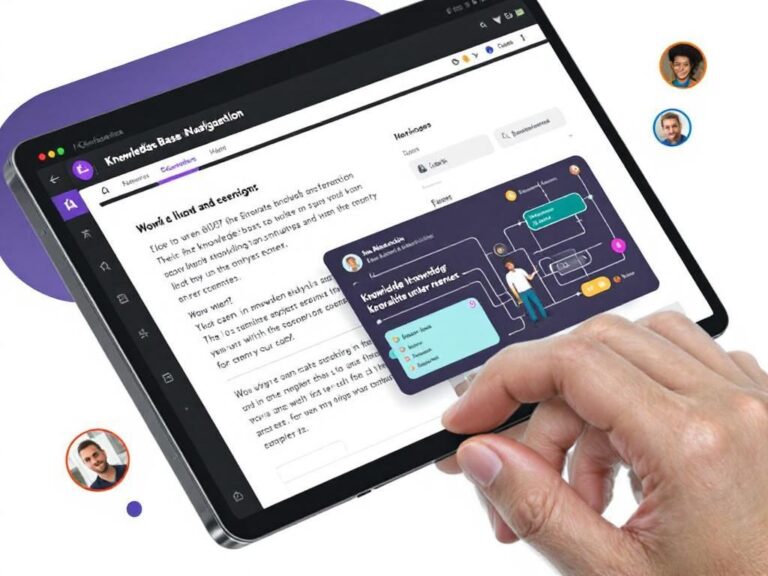
In today’s digital landscape, navigating a vast knowledge base can often feel overwhelming. By integrating AI assistants, organizations can streamline user interactions and enhance usability, making information more accessible and easy to find. This transformation is key to improving user experience and fostering greater engagement with content, as detailed in resources on enhancing usability.
The Evolution of Knowledge Management
For decades, organizations have relied on various methods to manage and distribute knowledge. Initially, this involved physical documents and centralized repositories. With the onset of the internet, digital databases became the norm. However, even as technology advanced, users often struggled to find the information they needed in a timely manner.
Machine Learning & Artificial Intelligence
Challenges in Traditional Knowledge Bases
Integrating AI assistants into knowledge base navigation can significantly enhance user experience by providing instant, tailored responses to queries. These intelligent systems not only streamline access to essential information but also adapt to individual preferences, making the search process more efficient. For insights on the latest advancements in AI technology, explore latest tech trends.
Traditional knowledge bases often face several challenges, including:
- Poor Search Capabilities: Users frequently find themselves sifting through irrelevant results.
- User Interface Limitations: Complex navigation structures can deter users from finding valuable information.
- Maintenance and Updates: Keeping content current and relevant is often a Herculean task.
- Scalability Issues: As organizations grow, their knowledge bases may struggle to keep up with increasing content.
AI Assistants: The Game-Changer
AI Technology has emerged as a game-changer in the field of knowledge management. These intelligent systems can understand user intent, learn from interactions, and provide instantaneous answers. Here are some of the key benefits AI assistants bring to knowledge base navigation:
Enhanced Search Functionality
AI assistants leverage natural language processing (NLP) to provide enhanced search capabilities. Traditional keyword searches can be limiting, but with AI, users can:
- Ask questions in natural language.
- Receive contextually relevant results.
- Access a broader range of related content.
Personalized User Experience
AI assistants can learn from user behavior to deliver personalized recommendations. They can:
- Suggest content based on previous interactions.
- Adapt to individual user needs and preferences.
- Help new users navigate by providing tailored guidance.
Integrating AI Assistants into Knowledge Bases
Implementing AI assistants into existing knowledge management systems involves several key steps:
Machine Learning & Artificial Intelligence
1. Assess Current Infrastructure
Evaluate your current knowledge base systems and identify gaps that AI can fill. This may include:
| Assessment Area | Questions to Consider |
|---|---|
| Search Functionality | Are users satisfied with the current search results? |
| User Engagement | How often do users interact with the knowledge base? |
| Content Quality | Is the content regularly updated and relevant? |
2. Choose the Right AI Technology
There are several AI technologies available, ranging from chatbots to sophisticated machine learning systems. Consider:
- Scalability of the solution.
- Integration capabilities with existing platforms.
- Support for multiple languages, if applicable.
3. Train the AI Model
The effectiveness of an AI assistant hinges on its training. This involves:
- Providing it with ample data from your knowledge base.
- Teaching it to understand user queries accurately.
- Regularly updating the model based on user feedback.
Benefits of AI in Knowledge Base Navigation
Integrating AI assistants into knowledge management systems can lead to numerous advantages:
Increased Efficiency
By providing quick and accurate information retrieval, AI assistants reduce the time users spend searching for answers, allowing them to focus on more strategic tasks.
Machine Learning & Artificial Intelligence
Improved Satisfaction
A streamlined and intuitive user experience often leads to higher satisfaction rates among employees and customers alike.
Data-Driven Insights
AI systems can analyze interactions to provide valuable insights into user behavior, helping organizations identify knowledge gaps and areas for improvement.
Future Trends in AI-Assisted Knowledge Management
The landscape of knowledge management is continuously evolving. Here are some trends that are shaping the future:
1. Greater Adoption of Conversational AI
As user expectations grow, conversational AI is expected to become a staple in knowledge bases, promoting more engaging interactions.
2. Increased Focus on Security
With the rise of AI, concerns over Data Privacy and security are paramount. Future AI systems will likely incorporate robust security measures to protect sensitive information.
3. Integration with Emerging Technologies
AI will increasingly work alongside other technologies, such as augmented reality (AR) and the Internet of Things (IoT), to create comprehensive knowledge solutions.
Conclusion
The integration of AI assistants into knowledge base navigation is not just a trend; it represents a fundamental shift in how organizations manage information. By enhancing search capabilities, personalizing user experiences, and providing data-driven insights, AI empowers businesses to unlock their knowledge potential. As technology continues to evolve, embracing these innovations will be crucial for organizations looking to thrive in an increasingly complex digital landscape.
Machine Learning & Artificial Intelligence
FAQ
What are AI assistants and how do they enhance knowledge base navigation?
AI assistants are advanced tools that utilize Artificial Intelligence to help users easily navigate knowledge bases by providing instant answers, suggesting relevant articles, and streamlining the search process.
How can AI assistants improve user experience in knowledge bases?
AI assistants improve user experience by offering personalized recommendations, reducing the time spent searching for information, and providing real-time support, leading to increased user satisfaction.
Can AI assistants be integrated with existing knowledge management systems?
Yes, AI assistants can be seamlessly integrated with existing knowledge management systems to enhance their capabilities and provide users with a more interactive and efficient experience.
What are the benefits of using AI assistants for knowledge base navigation?
Benefits include faster access to information, improved accuracy in retrieving relevant data, enhanced user engagement, and the ability to learn from user interactions for continuous improvement.
Are AI assistants capable of understanding natural language queries?
Yes, most AI assistants are designed to understand and process natural language queries, allowing users to ask questions in a conversational manner.
Machine Learning & Artificial Intelligence
How do AI assistants handle frequently asked questions in knowledge bases?
AI assistants can identify and respond to frequently asked questions by providing instant answers or directing users to the appropriate articles, helping to alleviate repetitive inquiries.